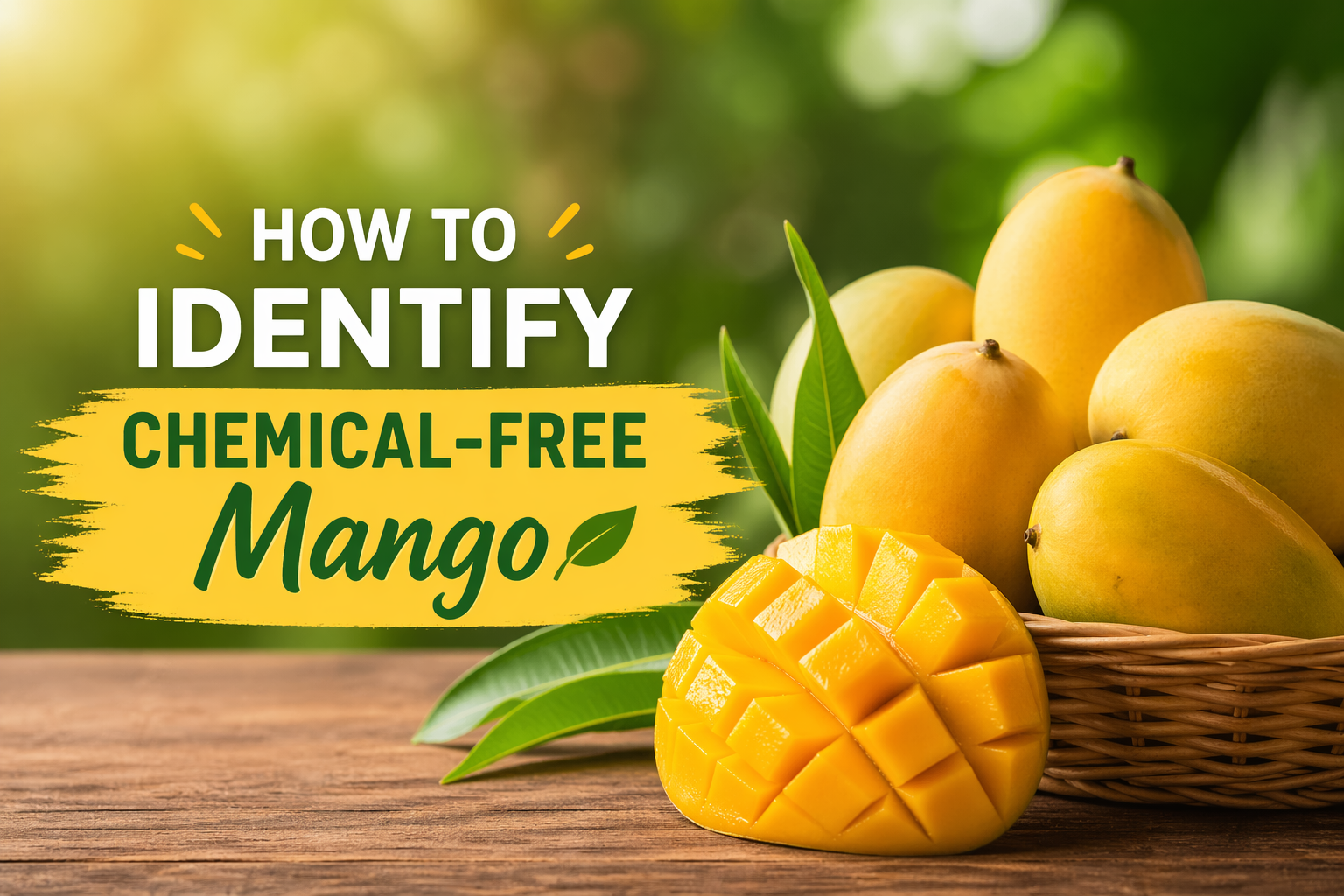
How to Identify Chemical-Free Mango in Bangladesh (Complete Buyer’s Guide)
Mango is known as the “King of Fruits” in Bangladesh, loved for its sweetness, aroma, and nutritional value. But in today’s market, one common concern for buyers is whether the mango is chemical-free or artificially ripened. Many traders use harmful substances like carbide to speed up ripening, which can affect both taste and health.
If you want to ensure safe and natural mango for your family, this guide will help you identify chemical-free mango easily.
Why Chemical-Free Mango Matters
Chemical-ripened mangoes may look attractive, but they often lack natural taste and can be harmful. Substances like calcium carbide can release toxic elements that may cause:
- Headaches and dizziness
- Digestive issues
- Long-term health risks
That’s why choosing organic, naturally ripened mango is essential for a healthy lifestyle.
Key Signs of Chemical-Free Mango
1. Natural Color Variation
Chemical-free mangoes usually do not have a perfectly uniform color.
- You’ll notice a mix of green, yellow, and golden shades
- Artificial mangoes often look overly bright and evenly colored
👉 Tip: Too perfect = suspicious.
2. Check the Aroma
Naturally ripened mangoes have a sweet, pleasant smell from the stem area.
- Chemical mangoes often have little to no fragrance
- Sometimes they smell slightly chemical-like
👉 Always smell before buying.
3. Skin Texture & Appearance
Natural mango skin may have:
- Small black spots or minor blemishes
- Slight unevenness
Chemically treated mangoes:
- Look too smooth and shiny
- Have no natural marks
👉 Real mangoes are not “perfect-looking”.
4. Softness Test
Press the mango gently:
- Natural mango: slightly soft and juicy
- Chemical mango: hard outside but sometimes soft inside unevenly
👉 Avoid mangoes that feel artificially firm but look ripe.
5. Ripening Pattern
Cut the mango:
- Natural: evenly yellow or golden inside
- Chemical: yellow outside but pale or white inside
👉 This is one of the strongest signs of artificial ripening.
6. Taste Difference
Naturally ripened mangoes:
- Rich, deep sweetness
- Strong aroma and flavor
Chemical mangoes:
- Less sweet or bland
- Sometimes slightly bitter near the skin
👉 Taste reveals the truth instantly.
7. Water Test (Optional Home Test)
Put the mango in a bucket of water:
- Natural mango usually sinks
- Chemically treated mango may float due to artificial ripening
👉 Not 100% accurate, but useful as a quick check.
Common Chemicals Used in Mango Ripening
Understanding the problem helps you avoid it better:
- Calcium Carbide – Most dangerous, produces toxic gas
- Ethephon – Sometimes used for faster ripening
- Formalin (in rare cases) – Used for preservation
👉 Always choose trusted sources to stay safe.
Smart Buying Tips for Safe Mango
To ensure you get chemical-free mango in Bangladesh, follow these tips:
- Buy from trusted brands or farmers
- Prefer garden-fresh (bagan theke) mango
- Avoid extremely cheap prices during early season
- Ask about harvesting and ripening process
- Choose sellers who guarantee formalin-free mango
Best Practice: Choose Tree-Ripened Mango
The safest option is always tree-ripened mango, which:
- Develops natural sweetness
- Retains full nutrition
- Has authentic aroma and texture
These mangoes are usually collected directly from orchards and delivered without artificial treatment.
Final Thoughts
Identifying chemical-free mango is not difficult if you know what to look for. Always focus on natural color, smell, texture, and taste rather than appearance alone.
Choosing safe mango means:
- Better health for your family
- Real taste of nature
- Support for honest farmers